Why the NCLEX Feels Harder Now (And What Actually Changed)
You studied. You did the questions.
And you're still getting answers wrong that feel like they should be right.
That's not a knowledge problem.
Why It Feels Right
The advice to study harder makes sense. It's what worked in nursing school.
More content review meant better test scores. More practice questions meant more confidence. That loop worked because school tested knowledge — you knew the information, you passed.
So when NCLEX prep feels uncertain, the natural response is: study more.
Why It Fails on NGN
In 2023, the NCLEX transitioned to Next Generation NCLEX. The new format doesn't primarily test what you know. It tests how you decide.
Specifically, it evaluates clinical judgment: the ability to recognize clinical deterioration early, prioritize correctly under pressure, and act decisively when the picture is ambiguous.
That is a different cognitive skill from content recall. And most NCLEX prep products are still built around the old exam.
Most students don't realize they're preparing for the wrong exam.
This is why students with strong content knowledge still fail — or walk out of the exam feeling like nothing matched what they practiced. They were prepared for a test that no longer exists.
Pattern Identity
If you've studied hard and still don't feel ready — that's not a knowledge gap. It's accurate feedback about what you've been training versus what NGN tests. Most students in this position keep studying harder. The fix is different.
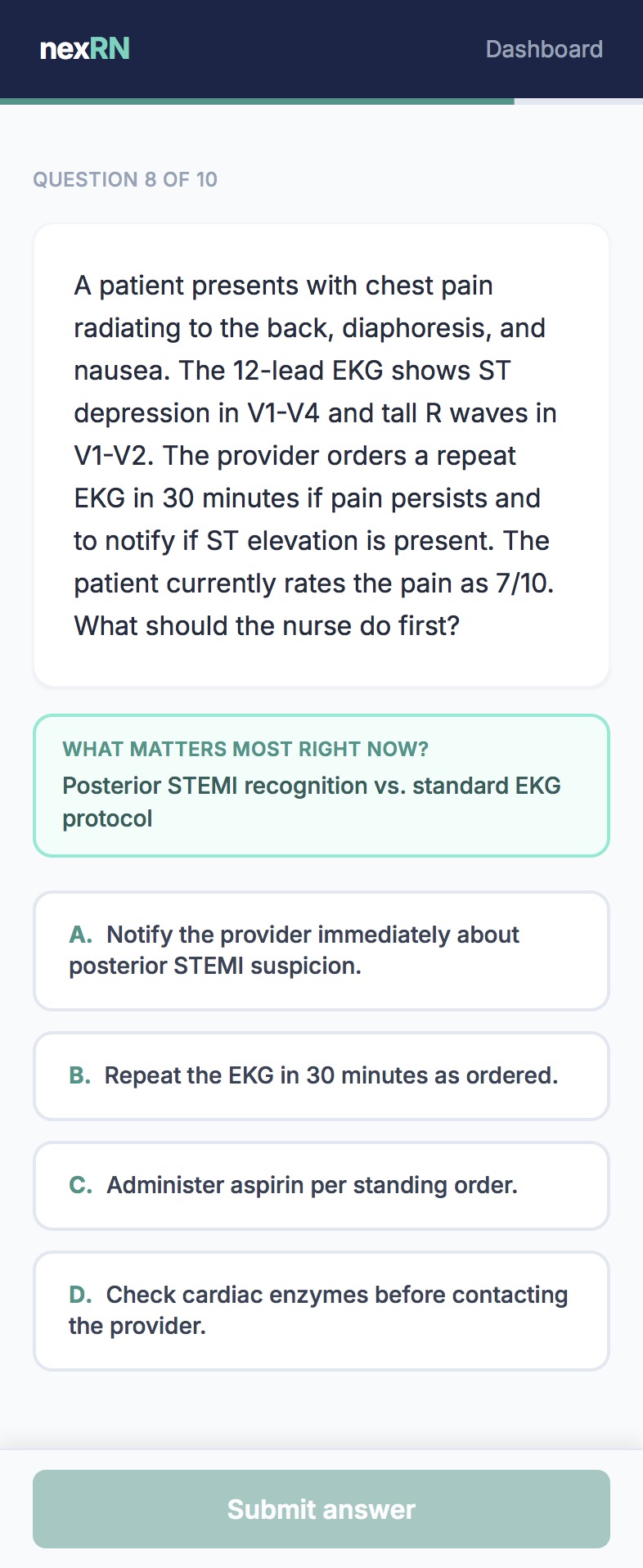
What It Looks Like in Practice
The first prepares you to answer content questions. The second prepares you for the exam that actually exists.
Why More Questions Don't Fix It
Practice questions reinforce the knowledge loop: read, answer, rationale, repeat. At no point do you practice the actual cognitive task NGN tests — deciding between two clinically defensible options under pressure.
More of the same practice widens the wrong skill while the right one stays untrained.
nexRN trains the clinical judgment the NCLEX actually tests — 10 questions per session, every day.
Try a free session at nexrn.ai