Why Knowing the Content Isn't Helping You Pass the NCLEX
You know the material.
And you're still getting questions wrong.
That's the problem.
Why It Feels Right
Every academic system you've been through has rewarded more studying. More reading, better grades. More review, better retention. Nursing school reinforced this. NCLEX prep reinforces it. "Do more questions" is the default advice because it's worked before.
Why It Fails on NGN
There are two separate cognitive tasks in play.
The first is content knowledge: knowing what Cushing's triad is, what digoxin toxicity looks like, what a normal potassium level is.
The second is clinical judgment: knowing what to do with that information when two actions are both plausible, the pressure is real, and you have to decide.
Nursing school trains the first. NGN tests the second.
A student who can recite every complication of heart failure may still prioritize the wrong patient in a multi-patient scenario — not because they don't know enough, but because they haven't trained the decision.
More content review doesn't close that gap. Every hour spent on content is an hour not spent training judgment.
This is one of the most common patterns we see across thousands of sessions.
Pattern Identity
If you know the material cold and still feel unprepared — that's not imposter syndrome. It's accurate feedback about what you've been practicing versus what the exam tests. Most students in this position study harder. The fix is to practice differently.
What It Looks Like in Practice
The first student adds content. The second student trains a decision.
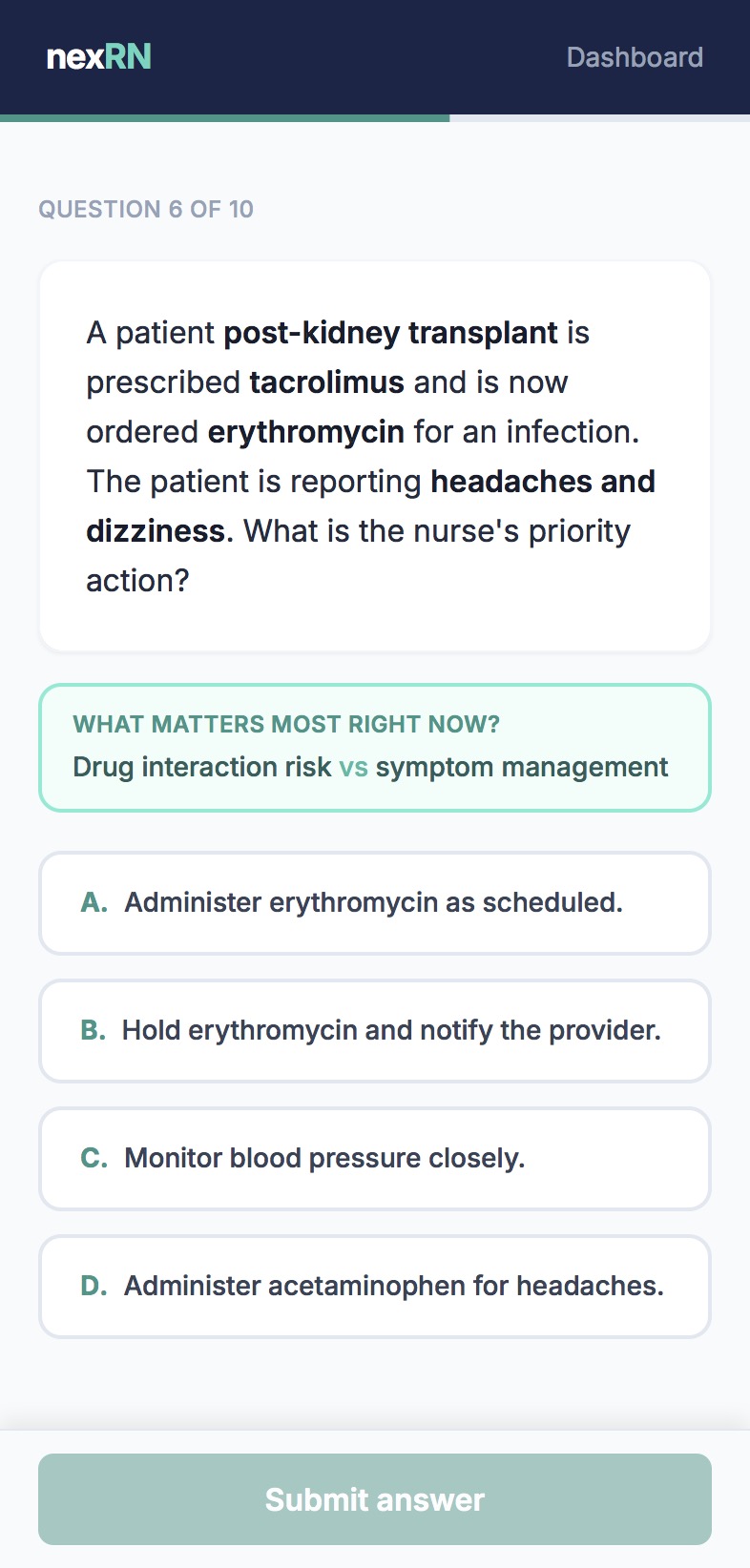
Why More Questions Don't Fix It
Practice questions feel productive. You're doing something. You're learning facts. You're reading rationales. But if they're training content recognition rather than decision-making, you're building the wrong muscle.
Volume of content practice doesn't substitute for decision practice.
nexRN trains the clinical judgment the NCLEX actually tests — 10 questions per session, every day.
Try a free session at nexrn.ai