Why You Pick the Safe Answer and Get It Wrong on NCLEX
You narrow it down to two answers.
One feels risky. One feels safe.
You pick the safe one.
You get it wrong.
This is one of the most common ways students lose points.
Why It Feels Right
Nursing is fundamentally about safety. First, do no harm. When in doubt, gather more information. Wait for the physician. Reassess.
This framework is taught from Day 1. It's good clinical practice.
Which makes it one of the most effective distractors on NGN.
Why It Fails on NGN
NGN evaluates a specific skill: recognizing when inaction is the greater risk.
In deterioration and prioritization questions, the "safe" answer — wait, reassess, gather more data — means the patient's condition progresses. The NCLEX is not asking you to be reckless. It's asking you to recognize when delay itself causes harm.
Inaction has a clinical cost. NGN tests whether you can calculate it.
This is one of the most common patterns we see across thousands of sessions.
Pattern Identity
If "safe" has been your tiebreaker — and you keep losing points on deterioration and prioritization scenarios — this is the pattern. You're not being reckless by choosing the more active answer. You're applying clinical judgment the way NGN requires.
What It Looks Like in Practice
The first student avoids risk. The second student calculates it.
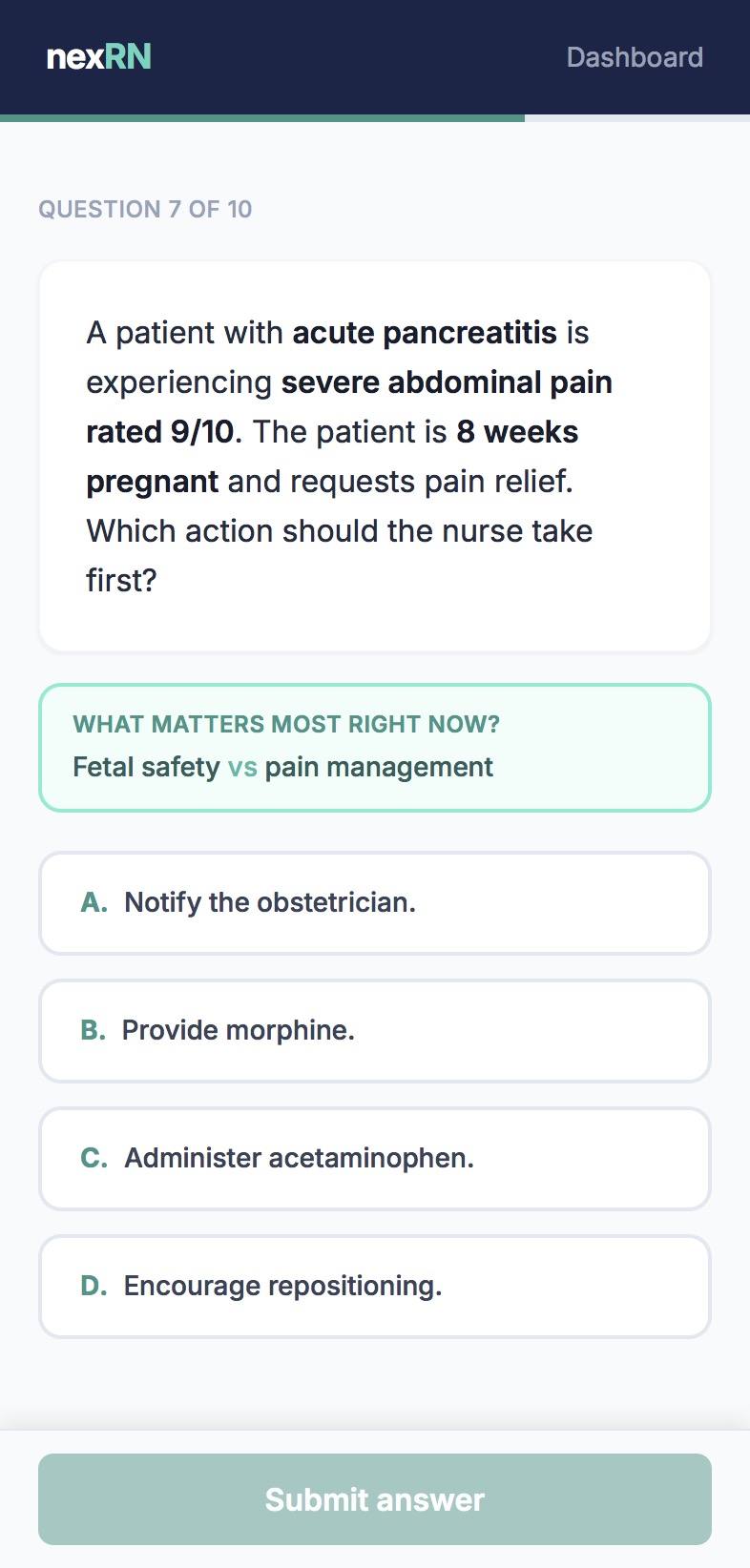
Why More Questions Don't Fix It
Most question banks include a rationale that says: always assess before acting. That principle is not wrong — but it is incomplete. Practicing in a system that reinforces caution as the default trains the wrong reflex for NGN scenarios where delay is the mistake.
nexRN trains the clinical judgment the NCLEX actually tests — 10 questions per session, every day.
Try a free session at nexrn.ai