Why You Miss Clinical Deterioration on NCLEX Questions
Heart rate: 98. Two hours later: 106.
Blood pressure: 118/74. Two hours later: 104/68.
Urine output: 42 mL/hr. Two hours later: 28 mL/hr.
Each number, in isolation, is borderline. Together, they are a patient in early shock.
Why It Feels Right
You were taught reference ranges. Normal heart rate: 60–100. Normal BP. Normal urine output. When you see a value, you compare it to the range. If it's inside the range, you move on. If it's outside, you flag it.
This is systematic. It's how clinical assessment was taught.
Why It Fails on NGN
NGN tests pattern recognition across time, not value recognition at a single point.
A heart rate of 106 is mildly elevated. A heart rate that has climbed 8 points in two hours while blood pressure is dropping and urine output is falling is a deterioration pattern — regardless of whether any single value is technically outside the normal range.
Students who check boxes miss the story. This is why students who know all their reference ranges still fail deterioration questions — they're reading each finding in isolation instead of reading the clinical picture across time.
This is one of the most common patterns we see across thousands of sessions.
Pattern Identity
If you've been missing deterioration questions despite knowing your normal ranges — this is the pattern. You're evaluating data points. NGN is asking you to read trends. Most students don't make this shift until they're shown what it looks like.
What It Looks Like in Practice
The first student monitors a number. The second student reads a trajectory.
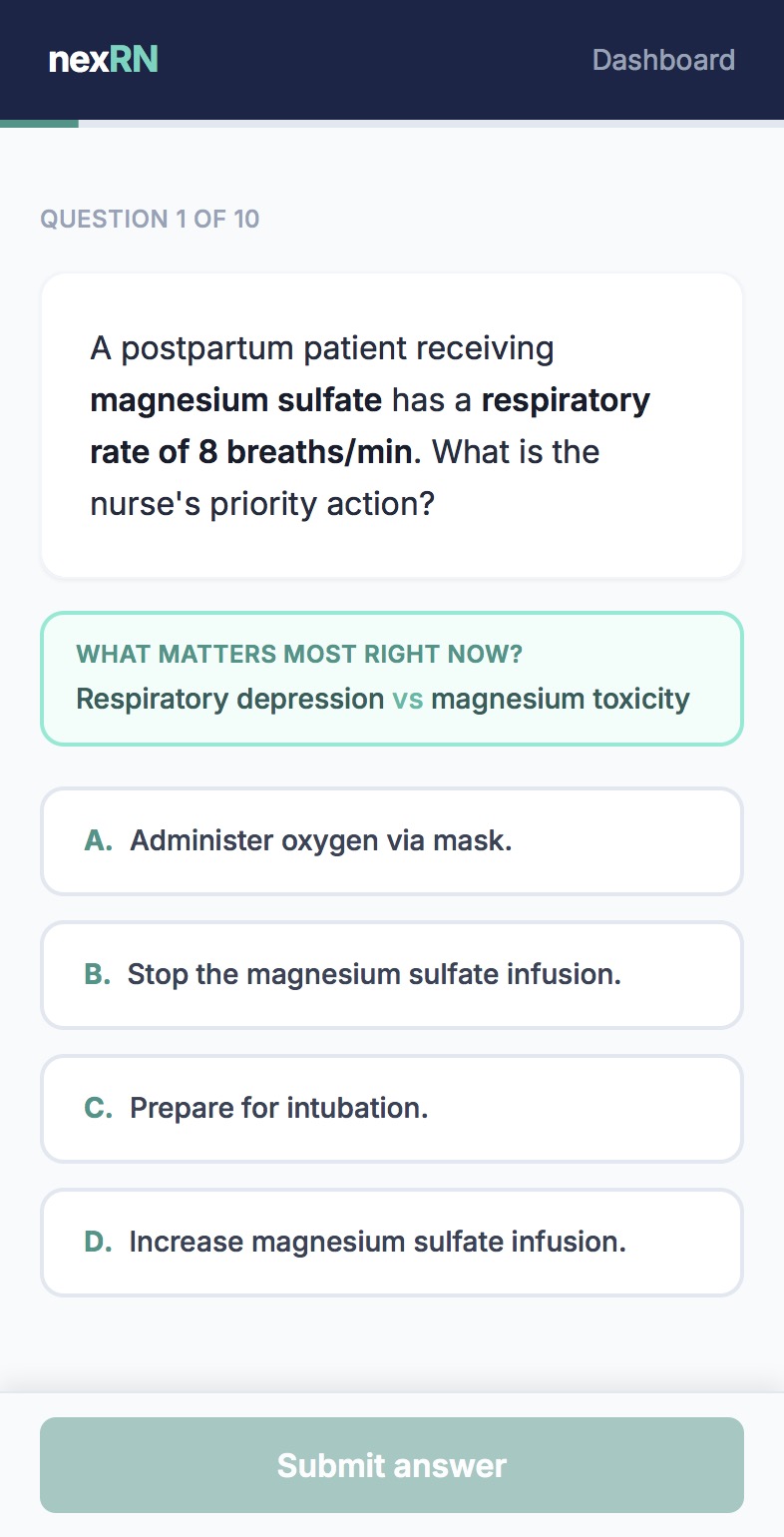
Why More Questions Don't Fix It
Most practice questions present a single set of vitals and ask: what do you do? NGN presents a change across time and asks: what does this mean? Practicing the first format doesn't build the skill to answer the second.
nexRN trains the clinical judgment the NCLEX actually tests — 10 questions per session, every day.
Try a free session at nexrn.ai