Why You Reassess When You Should Act on NCLEX
The patient is getting worse.
You choose to reassess.
And that's why you get it wrong.
Why It Feels Right
Assessment before intervention is a foundational nursing principle. Gather data before you act. Confirm the finding before escalating. Don't call the physician without being sure.
In many clinical situations, this is exactly right. Which is why it's such an effective distractor on the exam.
Why It Fails on NGN
NGN distinguishes between two very different situations:
When the clinical picture is incomplete — you need more data before you can decide.
When the clinical picture is clear enough — gathering more data means the patient gets worse.
In the first situation, reassessment is the correct answer. In the second, it's a delay — and delay has a cost.
Students who haven't trained this distinction choose reassessment as a default. Systematic. Thorough. And wrong, when the data was already telling them something.
This is one of the most common patterns we see across thousands of sessions.
Pattern Identity
If reassessment has been your go-to when you're uncertain — and you keep missing deterioration and escalation questions — this is your pattern. The instinct is clinically correct in the right context. NGN is testing whether you know which context you're in.
What It Looks Like in Practice
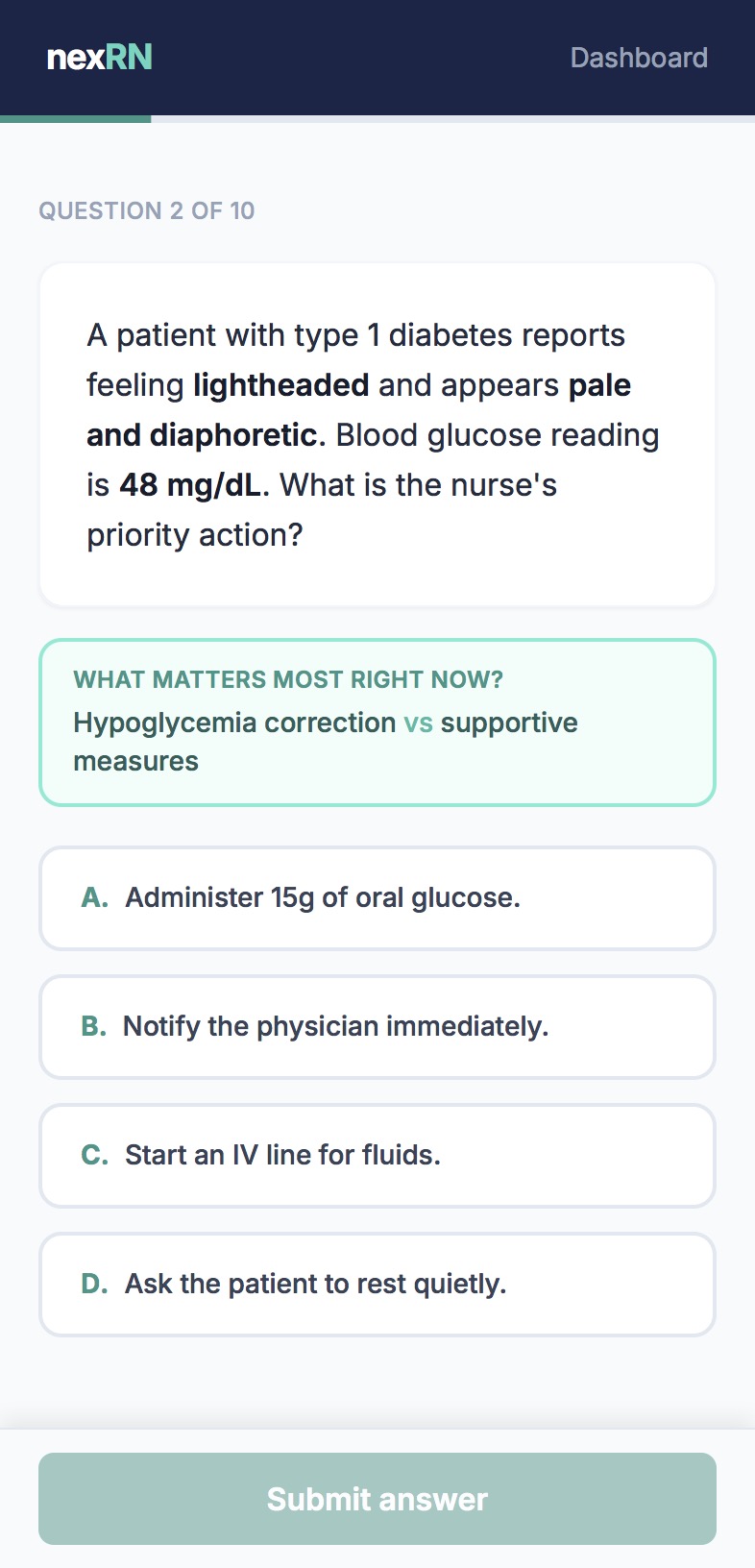
The first student gathers more data. The second student acts on the data they already have.
Why More Questions Don't Fix It
The reassessment option appears in nearly every practice question — and the rationale often says: always assess before acting. That principle is correct but incomplete. Practicing in a system that treats it as an absolute rule trains the wrong reflex for NGN deterioration scenarios.
nexRN trains the clinical judgment the NCLEX actually tests — 10 questions per session, every day.
Try a free session at nexrn.ai